


TFT: Teamfight Tactics
Riot Games, Inc
I went into TFT: Teamfight Tactics expecting a compact mobile strategy game and quickly found something more demanding: a game about making good decisions with incomplete information, then living with the result. It is a PvP auto battler from Riot Games, Inc., placed in the strategy category, and its central appeal is not direct control of every attack. I choose a team, position it, manage the resources available to me, and watch the plan play out against another player’s setup.
That distinction matters on a phone. You are not tapping rapidly to defeat enemies yourself. Instead, each round asks whether I noticed the right clues, spent at the right moment, and adapted before the board punished me. A strong start can disappear after one poor adjustment, while a weak opening can become competitive through patient planning. The result is a game that feels easy to begin but difficult to read well.
The mobile version is free to install, carries a Teen content rating, and includes optional purchases ranging from $0.99 to $159.99 per item. It has reached over 10 million installs, with an average rating of 4.5 from around 761 thousand ratings. Those figures suggest a large audience, but they do not remove the learning curve. I would recommend it most to players who enjoy turn-based decisions, changing conditions, and the satisfaction of improving through observation rather than reflexes.
How the first decision turns into a real plan
Starting with choices instead of commands
The first meaningful action is usually not an attack. It is deciding what kind of board I am trying to build. Available units, combinations, items, and opponents all influence that decision, so I cannot simply memorize one perfect arrangement and expect it to work every time. The game rewards a flexible plan: identify promising pieces, watch what other players are collecting, and avoid spending everything just because a tempting upgrade appears.
This creates a useful tension between ambition and survival. I may want to pursue a powerful combination, but another player can be competing for the same pieces. Continuing stubbornly can leave my board unfinished. Changing direction too early can waste the progress I already made. The best turns often involve accepting a less glamorous option because it gives the team a better chance of functioning immediately.
Related News

Why WhatsApp Messenger Still Makes Everyday Communication Feel Easy

Jurassic World: The Game Is the Better Dino Tycoon for Strategic Players

Threads in Real Life: Who Should Join, Lurk, or Leave

How SHEIN Turned Shopping Into an Endless Content Feed

How to Make Fortnite Feel Smarter on Mobile

Should You Switch to Microsoft Outlook on Mobile?
On a touchscreen, the basic interactions are approachable. I can move units, inspect information, buy or sell pieces, equip items, and adjust positions without needing complicated controls. The difficult part is not operating the interface; it is understanding the consequences. A unit placed one space differently may survive longer, protect a damage dealer, or fail to reach the target that matters. Those small decisions give the board a satisfying sense of cause and effect.
Why the board is more readable than it first appears
New players can initially feel overwhelmed by unfamiliar names, traits, item effects, and changing team possibilities. My advice is to resist trying to learn everything at once. Start by asking three practical questions: what is already strong on my board, what does the opposing setup threaten, and what can I improve without destroying my economy? That approach is more useful than chasing a guide blindly.
A particularly important habit is scouting. Looking at other boards is not just something to do when I have spare time. It tells me which pieces may be contested, whether opponents are placing their strongest units on one side, and whether I should shift my own formation. Scouting turns the game from a private puzzle into a shared table where everyone’s decisions affect everyone else.
Gallery
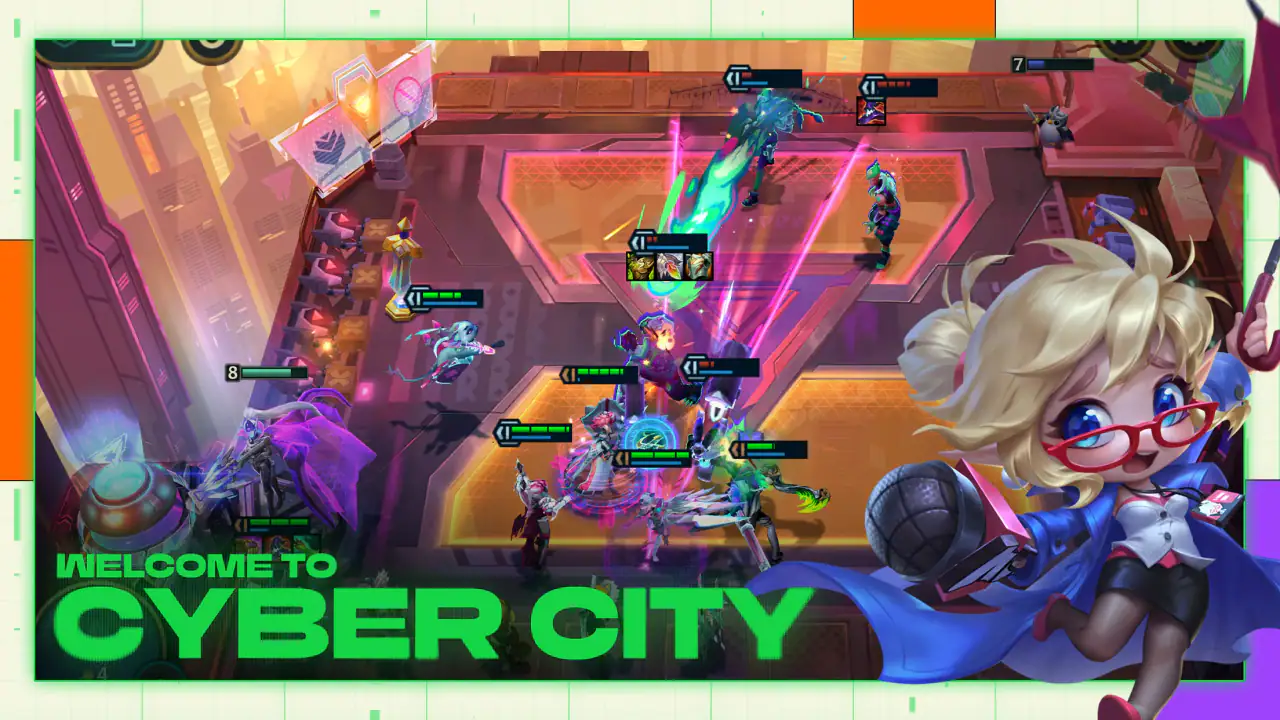
The trade-off is that this requires attention. TFT is more thoughtful than a typical quick mobile match, even though individual rounds can move along without direct input. If I play while distracted, I may miss a shop opportunity, forget to reposition, or spend resources without noticing the wider situation. The game is convenient to launch, but it does not always reward half-attention.
A realistic everyday session
Imagine I have a short break after work and start a match intending to play casually. During the opening, I find a couple of useful units but not the exact team I had imagined. Instead of forcing that idea, I use the early board to preserve health and collect enough information to decide later. Another player is visibly building around a similar direction, so I keep an alternative in mind.
After a few rounds, my initial units are no longer winning consistently. I inspect the next shop, compare the cost of upgrading with the value of saving resources, and move a durable unit toward the side where the opponent’s threat is concentrated. The next fight goes better, not because I performed a special action during combat, but because my earlier choices finally matched the problem in front of me.
That feedback is the heart of the experience. I make a change, see whether the board improves, and then decide whether the result justifies continuing. A victory gives me room to develop the plan; a loss tells me something about positioning, power, or timing. Even a disappointing round can be useful when I understand why it happened.
The feedback rhythm keeps the match moving
Each fight creates a compact cycle: prepare, observe, evaluate, and prepare again. I am rarely waiting for a long stretch with nothing to do. Between battles, there is always a meaningful question about whether to buy, save, combine, reposition, or remain flexible. During combat, the game becomes a test of the preparation I just completed.
I like this rhythm because it makes progress visible without requiring constant tapping. When a frontline unit holds an enemy long enough for the rest of the team to work, I can see the value of positioning. When a key unit falls before contributing, I have a clear reason to reconsider protection or placement. The feedback is not always simple, but it is usually connected to a decision I made.
The auto-battler format also changes how I think about failure. In an action game, losing may mean I missed a dodge or pressed the wrong button. Here, the mistake may have happened several minutes earlier when I chose an expensive upgrade, ignored a contested unit, or built a team that had no answer to a particular threat. That delayed feedback can be frustrating, but it is also what gives the game strategic depth.
Where the learning curve becomes demanding
The main weakness is that the game can feel opaque before its language becomes familiar. A new player may see a board full of symbols and understand that something is happening without knowing which choice mattered most. The solution is to treat early matches as experiments rather than tests of skill. Focus on one idea at a time, such as saving resources, watching opponents, or improving formation.
I also found that random availability can make a plan feel unstable. The game asks me to adapt, but adaptation is easier when I understand the value of several possible directions. Players who prefer complete control, fixed puzzles, or predictable progression may find this uncertainty tiring. A traditional turn-based strategy game can be a better fit when I want every option to remain visible and repeatable.
Another limitation is the attention cost of competitive play. Even though combat is automated, a serious match is not passive entertainment. I need to inspect the board, make timely decisions, and remember what other players are doing. For a five-minute distraction, a simpler arcade or puzzle game may suit me better. TFT works best when I can give it a focused block of time.
What counts as a reward
The most satisfying rewards are not limited to the match result. I enjoy recognizing a pattern I missed before, finding a better use for an item, or discovering that a small formation change solves a problem. The game gives me a reason to continue because each session can answer a question: was that strategy bad, or did I execute it badly?
Winning feels good, of course, but the strongest long-term reward is improved judgment. I begin to notice when I am overcommitting, when my strongest unit is exposed, or when an opponent’s board suggests an upcoming threat. These are practical skills inside the game, and they make later matches feel more deliberate rather than merely lucky.
There is also a useful difference between immediate and delayed reward. A short-term purchase or upgrade may strengthen the next fight, while saving resources can create a stronger position later. Choosing between those outcomes is one of the game’s most interesting decisions. I often feel rewarded simply for making the correct trade-off, even when the final placement is not perfect.
Optional purchases are worth considering carefully. Since the game is free to play but offers items priced from $0.99 up to $159.99, I would approach spending as a personal boundary rather than part of the strategy. Anyone sensitive to in-app purchase temptation should decide in advance whether they want to spend at all. The core appeal for me comes from team-building and adaptation, not from treating purchases as a shortcut to better decisions.
Why another match begins after the reset
When a match ends, the board’s immediate story is over. That reset is essential because it prevents one successful composition from becoming a permanent solution. I return to the next game with knowledge, not with a guaranteed advantage. The changing conditions encourage experimentation and make the opening decision feel fresh again.
This reset can be both liberating and exhausting. I do not have to protect a long campaign or worry that one mistake has ruined a saved world. At the same time, progress is mostly personal: I am improving my understanding rather than simply unlocking a stronger permanent army. Players who enjoy building a lasting collection may prefer a traditional strategy title with a more persistent campaign structure.
The reason I start another session is usually specific. I want to test a different opening, correct a positioning mistake, or see whether I can recognize a contested strategy earlier. That is a healthier loop than playing only to fill time, because every new match has a small purpose. If I cannot identify what I want to learn next, I usually enjoy the game less.
Who will get the most from it
TFT is a strong choice for someone who likes strategy but does not want to control every second of combat. It suits players who enjoy comparing options, reading opponents, and adjusting a plan under pressure. Fans of board games, drafting systems, and competitive turn-based play will likely understand its appeal quickly, although the mobile presentation makes the experience more accessible than a physical table full of components.
It is also a good fit for players who want matches that feel different from one another. The changing selection of units and the need to respond to other boards stop the game from becoming a simple checklist. I can use familiar principles while still facing a new tactical problem.
I would be more cautious recommending it to someone seeking a relaxed game with no punishment for distraction. Losing health because I failed to notice a threat can feel harsh when I am playing casually. I would also steer away players who dislike randomized choices, resource management, or learning through repeated failure. A puzzle with fixed solutions or a direct tactics game may provide clearer control.
How it compares with other mobile strategy choices
Compared with a real-time strategy game, TFT is less about rapid commands and more about preparation. I do not need to send individual units across a map or manage several battles manually. That makes it easier to play on a phone, but it also means I cannot rescue a bad plan with quick reactions once combat begins.
Compared with a collectible card game, the focus is less on bringing one carefully assembled deck and more on responding to what appears during the match. I still need to understand combinations and timing, but the board develops in front of me rather than following only a list I prepared beforehand. Players who enjoy improvisation may prefer this; players who love precise deck construction may find it less satisfying.
Compared with a conventional turn-based tactics game, the automated fights reduce direct control but increase the importance of forecasting. I am not selecting every attack, so I must make the board itself do the work. That creates a distinctive compromise: less moment-to-moment agency, but more emphasis on composition, placement, and economic timing.
Practical habits that improve the experience
My first recommendation is to separate scouting from shopping. Before spending resources, I look around the other boards and ask whether my intended pieces are widely contested. This takes little time but can prevent several rounds of chasing a plan that other players are also trying to complete.
Second, I avoid treating every shop refresh as an emergency. Spending resources just because the next option is visible can leave me unable to make a more important upgrade later. I find it useful to decide whether I am trying to stabilize now or build toward a stronger future board. That simple label makes impulsive spending easier to recognize.
Third, I test positioning deliberately. Rather than moving several units at random after a loss, I change one part of the formation and watch what happens. If the result improves, I have learned something concrete. If it does not, I can reverse the change without losing track of the original problem.
Finally, I review the last few rounds before starting another match. I ask where the plan first stopped working, whether I reacted too late, and whether I ignored information that was already visible. This turns the reset into a learning tool. Without that reflection, it is easy to blame luck for a decision that could have been improved.
Device expectations and long-term appeal
The game supports devices running Android 9 or newer, which makes it available to a broad range of modern phones and tablets. Even so, I would choose a device that gives me enough screen space to inspect the board comfortably. The interface is manageable, but small details matter when I am checking units, items, and positioning during a busy round.
The current version is 18.1-5392842, and the game’s changing nature is part of its identity. That can be exciting because there is always a reason to revisit familiar ideas, but it also means the best approach is not frozen forever. I prefer learning principles—economy, scouting, positioning, and adaptation—rather than relying entirely on an old recipe.
After spending time with it, I see the appeal clearly: action leads to immediate feedback, feedback informs the next decision, and the match rewards both successful planning and useful mistakes. The reset then removes certainty and gives me a fresh problem. The loop works because every new session promises a different answer to the same strategic question: can I build a team that survives what the lobby is doing right now?
My final view is positive, with an important qualification. I would recommend this free strategy game to a friend who enjoys competitive thinking, patient experimentation, and matches that ask for attention without demanding constant manual combat. I would not recommend it to someone who wants a predictable campaign, complete control over every attack, or a game that can be played mindlessly during a spare minute. For the right player, its strongest reward is not simply finishing first; it is understanding why the board worked, why it failed, and why trying once more feels worthwhile.
FAQs for TFT: Teamfight Tactics
What is TFT: Teamfight Tactics, and how does a match work?
TFT: Teamfight Tactics is an auto-battler strategy game from Riot Games, set in the League of Legends universe. You build a team by purchasing champions, combining copies to upgrade them, and arranging units on a board. Battles happen automatically, so success depends on preparation, positioning, item choices, economy management, and adapting your strategy to the units and traits offered during each match.
Can I play TFT: Teamfight Tactics on Android and iOS for free?
Yes. TFT: Teamfight Tactics is available as a free download on compatible Android and iOS devices. The game uses optional in-app purchases for cosmetic content such as arenas, emotes, Little Legends, and other visual items. These purchases are not required to compete, although players should check device compatibility, available storage, and their app store’s regional requirements before downloading.
Does TFT: Teamfight Tactics require an internet connection?
TFT is primarily an online multiplayer game, so a stable internet connection is required for normal matches, account access, updates, and social features. It is not designed as a fully offline experience. Playing over a reliable Wi-Fi or mobile data connection is recommended, because interruptions can cause delays, disconnections, or penalties if you leave an active match unexpectedly.
Is TFT: Teamfight Tactics suitable for beginners?
TFT can be enjoyed by beginners, but its many systems may feel overwhelming at first. New players must learn about champions, traits, items, gold interest, leveling, rolling, positioning, and changing game sets. The tutorial and early matches provide a useful introduction, while experimenting with different compositions is the best way to understand the game without trying to memorize every strategy immediately.
Can I play TFT with friends, and does progress carry across devices?
TFT supports playing with friends through Riot accounts and cross-platform matchmaking, allowing mobile players to compete with others on supported platforms. Your account-based progress, cosmetics, and other eligible content can generally be accessed across devices when you sign in with the same Riot account. However, availability and certain features may vary by region, platform, or account settings.
Pros
- Deep strategy with many team compositions and playstyles
- Regular updates keep the meta fresh and add new content
- Cross-platform progress lets you play across supported devices
- Free-to-play access includes the complete core gameplay experience
- Short matches fit well into mobile gaming sessions
Cons
- Matches can feel lengthy when playing several rounds in succession
- Learning items
- traits
- and champions takes considerable time
- Random shop rolls can make results feel luck-dependent
- Performance may suffer on older phones during busy battles
- Limited device storage may be needed for updates and assets


